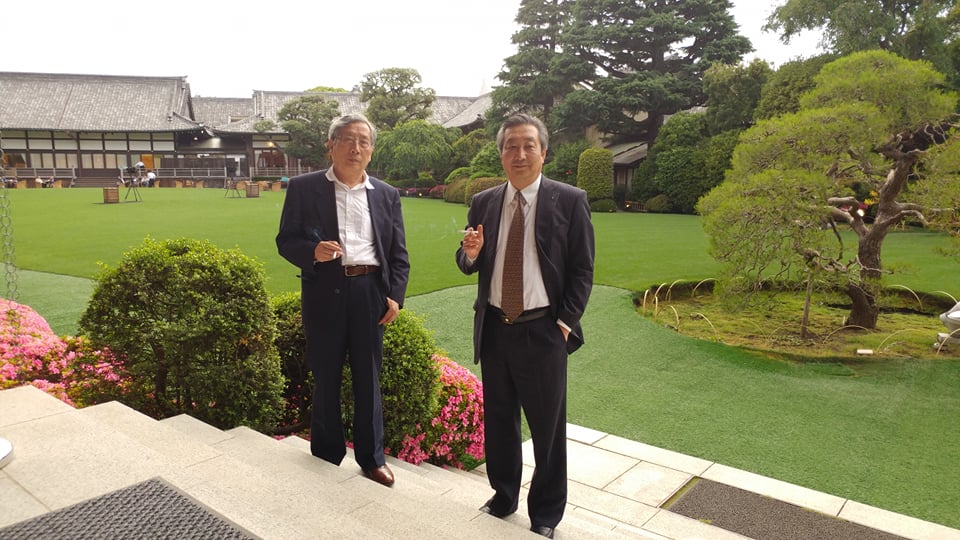
People from all walks of life in the capital held a discussion on “On Freedom of Speech.”
(Originally published in Wuhan ‘Youth Forum’, November 1986 issue).
Editor’s Note: After Hu Ping’s “On Freedom of Speech” was serialized in the July and September 1986 issues of Youth Forum, it caused a significant response. On September 5th this year, a symposium was held in Beijing, hosted by the Beijing correspondent station of the Youth Forum. The following excerpts are compiled from recordings of the symposium (not reviewed by the author). Due to space limitations, some comrades’ speeches were not included.
Hu Ping (Institute of Philosophy, Beijing Academy of Social Sciences):
Many comrades have already read the article “On Freedom of Speech.” This time, the Youth Forum published it in full. What you see now is actually the fifth draft: the first was written in July 1975, and the fifth was written in 1980. I have been thinking about this issue for quite a while, starting in 1975, when the path was still far left, but like many comrades, I believed our country would sooner or later experience a historic turning point. I considered how to embrace this turning point and move it in a better direction, and from this perspective, I considered freedom of speech.
The Cultural Revolution was caused by many causes. A long-term misunderstanding of freedom of speech is also a very important reason. When the Cultural Revolution began, criticizing ‘Hai Rui Dismissed from Office.’ How many people nationwide have thought this is an issue of violation of freedom of speech? Many people probably wonder whether ‘Hai Rui Dismissed from Office’ is actually a reference to Mao Zedong. Those defending it focus on saying it is not. There is a premise behind this: if so, it should be criticized. As for whether Wu Han’s publications should be interfered with by force, few people have ever considered them. If people had been more familiar with the concept of freedom of speech at the time, this kind of thing probably wouldn’t have happened. Although the Cultural Revolution had other reasons, freedom of speech was important because it was a citizen’s right, and in a modern democratic country, it is fundamental.
Freedom of speech is also a theoretical issue, but it is different from other theoretical issues. Other theoretical issues only need to be understood by the theoretical community. Or the academic community may have different views, but when it comes to freedom of speech, many people must have a unified understanding to ensure safety. In my article, I quoted Voltaire: I firmly oppose your viewpoint, but I swear to defend your right to speak. This statement perfectly reflects the general attitude toward freedom of speech. Nowadays, people talk about various conceptual reforms, and there are many ideas. Some of these ideas must be fairly consistent, because any society must be built on a foundation of certain consensus. Only then can society have basic order. Freedom of speech falls into this category. Freedom of speech is a fulcrum that cannot be done by itself, but without it, it is impossible.
In the past, when we talked about freedom of speech, there was a common saying that anti-Party and anti-socialist speech could not be granted. I thought this was exactly what needed clarification. If freedom of speech could only be limited by the will of those in power, then throughout history, no country has been free of speech—Qin Shi Huang had freedom of speech, Hitler was free as well. It is important to distinguish here that speech is a different issue from incitement, slander, and defamation. Incitement, slander, and slander are not pure speech; they are related to behavior. Hitler himself may not have killed anyone, but his directives and documents were not purely rhetoric.
Our country has hundreds of millions of citizens, but how many truly understand freedom of speech? This is a very serious fact. If so many citizens do not understand freedom, then it is not guaranteed. The current atmosphere is quite relaxed, but for it to take root, it depends on our citizens strengthening their civic awareness. My article has given examples of this, showing that legal awareness is even more important than the law itself. Some underdeveloped countries have legal systems and systems that copy those of established democracies, but coups still keep happening because ordinary people have little legal awareness.
As intellectuals, our means of influencing society are through speaking, writing, and so on. Freedom of speech is a fundamental means of us. If this issue is not resolved, intellectuals cannot play their role in any field. Some compare Chinese and Western cultures, saying we are politically dominated by scholarship, while others are dominated by scholarship. Because we have no freedom of speech, we can only write or speak according to the emperor’s will, argue for him, or refine his ideas, so naturally we cannot control or influence politics.
Li Yining (Professor at the School of Economics, Peking University; advisor to Youth Forum):
Some of the views putforward by Comrade Hu Ping in the article are, in my opinion, thought-provoking. Regarding the issue of freedom of speech, there can be discussion. The problem is real, and during academic discussions, each person can present their arguments based on their own views. Debate is a good thing; it can break the monotony and inspire people. As for right and wrong, only through discussion can it be clarified. I think this is the purpose of organizing this discussion by Youth Forum magazine.
From the perspective of decision-making, the basis for decisions is information—the more abundant the information, the better. With sufficient information, it can then be categorized, filtered, processed, and organized, which helps make the right decisions. If we treat freedom of speech as a guarantee of providing sufficient information, and regard all the statements made by people with different stances, levels, and viewpoints as information that can be classified, filtered, processed, and organized, then freedom of speech helps correct decision-making, not hinders it. This is because freely expressed opinions, although some are right or wrong, some are reasonable and some are unreasonable, but wrong views and unreasonable views are still part of the information. Decision-makers may choose not to adopt it or absorb it into their decisions, but at least it can serve as a reference from different perspectives. Gathering information from multiple sources does not harm decision-making. On the contrary, if you only let others provide the “correct” views and not allow “incorrect” opinions to emerge, the result will be a significant reduction in information, and the references and bases for decision-making will be insufficient. Moreover, some views cannot be definitively confirmed without verification.
Igreatly appreciate Comrade Hu Ping’s point in his article that practicing freedom of speech helps cultivate true Marxists. True Marxism possesses strong vitality. It is precisely because it possesses strong vitality that it can survive and continuously develop. To develop Marxism, it is necessary to allow free and sufficient discussion of Marxist arguments. Discard some of the content that has already been proven inappropriate in practice and add new content. In recent years, discussions about socialist commodity economies and the socialist economic model have been conducted under conditions that allow for the expression of various different statements. If only Marxist works had already been allowed to publish and repeat what classic writers had said, how could Marxist economic theory have developed? We hope that this generation of youth, the next generation of youth, will grow into Marxists. But as Comrade Hu Ping said in his article, “Faith cannot be inherited.” Young people should be allowed to debate, think, explore, and discern within an environment of freedom of speech. When they accept Marxism through their own reflection and choices, it will be passed down from generation to generation. Such Marxism is a Marxism with strong vitality, a developed Marxism.
I hope to have some discussion on the issue of freedom of speech. Of course, it’s impossible for all opinions to be unanimous in discussions, nor is it necessary to demand it. Some of the statements in Comrade Hu Ping’s article, upon careful examination, may still be open to debate. But that’s okay; I believe the more you debate, the clearer the truth becomes. In a sense, the discussion of freedom of speech itself may be far more important than everyone rushing to a “yes” or “no” conclusion.
Du Ruji (Professor at China University of Political Science and Law):
I read Comrade Hu Ping’s article on freedom of speech, and I was both happy and excited. Because from his articles, I saw the level of thought among the younger generation and saw China’s bright future. I think, since there is Hu Ping, there must be many young people like him.
Our country is currently undergoing a great revolution, but the significance of this revolution may not yet be fully revealed. I believe it is epoch-making, of global significance, and will become a milestone for the international workers’ movement, setting an example for the development of Marxism and the liberation of working people. This revolution will continue for quite some time, and the youth of today will be the main force driving it, with responsibility falling on you.
Comrade Hu Ping’s article addresses almost all issues related to freedom of speech. The paper is very persuasive, combining theoretical analysis with practical materials, logically rigorous. I hardly believe it came from a young man. The issue of freedom of speech is an old one; many scholars have discussed it in the past, but most have been written by Western political thinkers. In our country, I have never seen a single article or work on freedom of speech as detailed and comprehensive as Comrade Hu Ping’s. This cannot help but make me, an old man, greatly admire it. Unfortunately, this excellent article was banned and delayed for several years before it could be introduced to Chinese readers. This shows that not all elders share my views, nor do I find outstanding young people among the younger generation as I do. I hope some of the elders will think carefully, put aside their pride, and engage more with young people. The happiness of the nation and its people is that young people surpass the elders, and that the younger generation surpasses the elders.
Although freedom ofspeech is explicitly stipulated in the constitution, in reality, some people have weak legal awareness, and some powerful comrades ignore constitutional provisions, arbitrarily suppressing and persecuting speech that differs from them. This behavior, which insists on being consistently correct and recklessly undermines the Constitution, should stop. I hope that taking advantage of the current wave of openness, everyone will call for freedom of speech. Historically, the people’s freedom has always been won by the people themselves. The most important foundation of freedom and democracy is freedom of speech. Without freedom of speech, there is no democracy. However, freedom of speech must also be fought for by the people themselves. Therefore, speech fighting for freedom of speech must be expressed and must be argued for. This seems contradictory: freedom of speech without freedom of speech is required. But in reality, freedom of speech is often realized in such contradictory situations. Because suppressing speech can never be done thoroughly. As for human thoughts, they are even harder to control. Even if most people’s thoughts can be controlled and influenced, there are always a few who are not. These few are outstanding heroes. I hope that in our country, such people will increase from few to many, or maybe a bit more.
I especially emphasize that freedom of speech mainly takes into account that our country’s reforms have already faced theoretical challenges. Since the Third Plenary Session, our country’s economic reforms have achieved tremendous success, and political reforms are now underway. It seems the future is bright. However, the hallmark of China’s economic reform is that it is hard to work diligently, rather than the past campaigns that “theory comes first” and shouted loudly. This practice indeed has many benefits. Hasn’t the recent economic reforms progressed quite smoothly? However, theoretical work has not caught up, and the theoretical arguments for reform have not been thoroughly discussed, which will inevitably bring trouble. If this issue is not resolved, our reforms (including economic and political reforms) could be abandoned halfway, or even aborted like Lenin’s New Economic Policy. This is what I call a theoretical challenge or debate. This debate will be a new, modern one; outdated models cannot be adopted, but new arguments must be proposed. This debate is simultaneously a battle to develop and improve Marxism, and an anti-dogmatism debate. I believe the main force in future argumentation will be young people. And to engage in debates, freedom of speech must be won; to win freedom of speech, there must be people who have freedom to speak freely. This concerns the fate of the country and its people, bearing a heavy responsibility. It must not be taken lightly!
He Jiadong (Deputy Editor-in-Chief of Worker Publishing House):
Hu Ping’s essays are elegant and elegant, full of theoretical charm. Calling it the Declaration of Human Rights in Modern China doesn’t seem like an exaggeration, although it appeared a bit late to readers. But this fact itself shows that Chinese history has entered a critical moment.
The slogan “Let a hundred flowers bloom, a hundred schools of thought contend” has been around for thirty years, but its effect has been minimal, because we exchanged gold dollars for a banknote that could not maintain its face value. The basic right we fought for—freedom of speech—is already enshrined in the Constitution, but this gold dollar must be exchanged for ‘innocent speakers’ bills to circulate. The more it is printed, the more it depreciates, and it may even become worthless paper.
Due to the lack of hard currency, paper money kept depreciating, forcing the issuance of new notes. So, the “Double Hundred,” “Three No’s,” and “Five Don’ts” have all been released. One thing we must remember is that those in power may let go or withdraw according to political needs, which is a form of political wisdom. But for those who pursue truth, they cannot decide whether to pursue it based on this. Truth does not change its value for the sake of climate change.
Mao Zedong advocated letting people speak, encouraging that both right and wrong words must be heard, even forcing themselves to listen, but this did not mean he advocated freedom of speech; rather, it meant “luring the snake out of its hole.” One wrong action is enough to erase a dozen correct programs. Mao Zedong as a thinker and Mao Zedong as a politician were equally sincere. He wanted to create a lively and lively atmosphere, while also striving for a ‘unified public opinion’ world of great harmony. How can this “beautiful personality form” of ice and charcoal be injected into history? Only in the Buddhist Pure Land can we attain this unborn and undying freedom. In the real world, if there is only one sound, there is no sound; if there is only one color, there is no color. As a politician, Mao Zedong had no choice but to put Mao Zedong as a thinker into a separate register and lock him in a cowshed. Mao Zedong, as a man, made the people stand up; As the god, Mao Zedong once again made the people kneel. His political philosophy and political practice came into sharp conflict. Throughout his life, he never escaped this predicament.
Fortunately, we do have a constitution after all. Hu Ping said the constitution can be criticized. Theoretically, this is beyond doubt. Otherwise, the constitution cannot be amended. However, the real issue now is not whether the Constitution can be criticized, but whether it actually counts. Since the Constitution stipulates that citizens of the People’s Republic of China have the freedom to speak freely, publish, assemble, associate, march, and demonstrate, administrative regulations must not conflict with the Constitution. So, when civil liberties are violated, where should they go to court? What sanctions should those who take pleasure in human rights violations face? If the “News Law” and “Publishing Law” cannot serve this purpose, then it is better to have none at all. Rather than encouraging “speakers” to become martyrs who risk their lives to offer advice, it would be better to give some discipline to those “travelers” who habitually pull braids, wear hats, and wield sticks. Rather than causing him to “bid farewell to his concubine,” even a few days of detention would surely make the implementation of the “Double Hundred” policy much smoother.
China has many committees, fighting flies and mosquitoes, and the Patriotic Health Campaign Committee; Prohibiting spit anywhere, and there is also the Five Talks, Four Beauties, and Three Loves Committee. The lack of a committee to promote the implementation of the Constitution is truly regrettable.
Li Ling (Deputy Editor-in-Chief of China Social Sciences Press):
Hu Ping’s article clarifies many vague concepts about freedom of speech.
The current situation is very good, but many people still feel uneasy. To truly dispel lingering fear, the first thing to do is to thoroughly rehabilitate some publications, plays, and articles that have been criticized in recent years for offending certain authorities.
For example, “mental pollution” can be reconsidered, but the term “mental pollution” is not widely understood; environmental pollution can be measured. But how do you measure the mind? The origin of this term (Li Shengping interjected: the source is Goebbels) is …… Hitler’s criticism of humanitarianism and alienation was a grave mistake. How could socialism have a personality cult without alienation? How can a public servant become a master? Why can’t we discuss this? Because it offends the interests of certain people. Those who do not acknowledge alienation are precisely the ones who do it the most with alienation and privilege. Some people wrote in their articles that they “can be discussed,” but critics of his articles were not allowed to be published. We should demand the right to criticize and counter-criticize; freedom of speech is a right we are born with.
There are many popular ideas and habitual sayings worth analyzing, such as “allowing others to speak” and “listening to the masses,” which is certainly better than not allowing others to speak or listening to others’ opinions. However, listening to opinions seems like looking down on others; Allowing speech seems to grant you rights. And many Chinese people. He didn’t realize he was the master, didn’t fight for his rights, but instead pinned his hopes on Judge Bao, Ji Gong, and so on. The drama “New Star” boldly exposes bureaucratism well, but Li Xiangnan’s actions still present a clear image. In a sense, Li Xiangnan provided a vivid theoretical basis for cadres’ children to become officials.
Yang Gang (Beijing Publishing House):
Even if Hu Ping’s articles are not blood-soaked or tearful, But at least you can see blood and a head. If our current favorable situation is determined by the course since the Third Plenary Session of the 11th Central Committee, we should not forget martyrs like Zhang Zhixin and Yu Luoke.
This article is very thoughtful and written in a very accessible style. Hu Ping once said he advocated one vow: “If it is the true Buddha, only everyday matters are spoken.” I strongly agree. He uses vivid and accessible examples to explain his ideas, making them easy for readers to accept. The writing style is very distinctive.
There are two points: if a standalone edition is published, it is recommended to revise it. First, the boundary between speech and behavior is relatively blurred, and some statements are easily subject to criminal law, which would conflict with freedom of speech and current criminal law. Could the boundaries be made clearer? Another is whether the article quotes Comrade Mao Zedong’s exposition on freedom of speech—can it be deleted?
Liang Zhiping (Department of Law, Renmin University of China):
There is a series of technical work to be done regarding the boundaries of freedom of speech. We have not yet established our major principles, so technical work can be postponed for now. Moreover, freedom of speech is primarily a matter of value, not just a matter of fact. Freedom of speech has a premise: the constitution. The constitution could never abolish this provision. But as a matter of value. It may conflict with the current criminal law, as long as there is no direct confrontation. Furthermore, freedom of speech may bring some drawbacks; it creates tension and conflict with the existing order, and the boundaries of conflict cannot be resolved once and for all.
Reading Hu Ping’s “On Freedom of Speech” feels like reading the debates of European Enlightenment scholars; their styles are quite similar. I think this is no coincidence; the most important reason is that China needs enlightenment, and it urgently needs enlightenment. Europeans took hundreds of years and shed considerable blood to understand “freedom of speech,” but here this is probably the first article systematically and deeply discussing freedom of speech. Why? Because it’s a restricted area. This alone proves that the issue of freedom of speech deserves serious attention and should be written in large detail.
I strongly agree with Hu Ping’s distinction between speech and action. Speech is not behavior, but an expression of thoughts, feelings, or will. Punishing speech is tantamount to condemning thoughts, feelings, or will. Unfortunately, in our history, this has been a tradition. From Han Fei’s legal ban on conduct, speech, and even the heart, to Qin Shi Huang’s burning of books and burying of scholars and decrees that “those who speak casually about poetry and literature shall be cast out of the marketplace,” from Dong Zhongshu’s “original intent to convict and convict” to the Qing dynasty’s “literary inquisition,” this tradition has been well preserved and even developed for over two thousand years. This issue can be explained by the need for authoritarianism, but its cultural connotations cannot be ignored. In traditional Chinese society, law and morality are blurred; morality is often enforced by law. This is likely one of the cultural and psychological factors that, although suffering from the harm of lack of freedom of speech, Chinese people are accustomed to using law to punish thoughts and emotions. Of course, there are other psychological factors that hinder freedom of speech, such as the worship of the state, power, and officialdom, all of which hinder the realization of true freedom of speech. Without thoroughly eliminating these old ideas and consciousness, it is impossible to deeply instill the concept of freedom of speech in people’s hearts. I think the work of settling traditional practices should also be part of the “enlightenment” theme.
Finally, it should be noted that the principle of freedom of speech has long been written into the constitution. However, when it comes to related issues, it is rarely cited; usually, only the “Three No’s” principle, “Double Hundred Policies,” or ancient phrases that have become “instructions” are cited as “not guilty.” The law no longer carries much authority, and policies and guidelines are often accepted or accepted openly or covertly. Isn’t all of this worth our deep reflection?
Mang Ping (Graduate student, Department of Journalism, Renmin University of China):
In the West, freedom of speech is called “first freedom.” Because with freedom of speech, we can fight for and protect other rights.
In my view, in modern society, one of the main contents of freedom of speech is freedom of the press and publication, because freedom of the press is the social expression of freedom of speech. In other words, the value of freedom of speech lies not only in the private exchange of opinions but more importantly in the ability to spread ideas throughout society. This is mainly achieved through media such as newspapers and magazines. Press freedom means that publications are not subject to prior restrictions and can freely express opinions. The democratic rights won by the Western bourgeoisie against feudal rulers were primarily freedom of the press. Its content includes abolishing systems that restricted publications, such as concessions, deposits, and newspaper inspections.
Since freedom of speech is the right to freely express opinions, press freedom means there must be multiple voices in newspapers and other media, not just one voice, regardless of where that voice comes from.
Mediawith press freedom possess great power, determined by its inherent characteristics. With press freedom, media can not only freely express the will of the people, but more importantly, they have the right to criticize the government—this is precisely the fundamental value of press freedom. Because of this, media can effectively restrain power and supervise the government as an independent force.
Chen Hengliu (Institute of History of Natural Science, Chinese Academy of Sciences):
After reading Comrade Hu Ping’s article “On Freedom of Speech” published in the Youth Forum, I was very excited. It is a very persuasive piece, well-organized and logically strong, and it was refreshing after reading. Ultimately, freedom of speech means allowing people to say things that hurt others’ ears. Novelty will never be spoken by the majority at once, and truth is always discovered first by a few. You can’t just say it because no one else says it that way. One of the keys to democratic systems and political reform is to let everyone speak honestly, allow people to criticize what they consider wrong, and freely express their views. Without this, there can be no democracy or spiritual civilization construction.
Min Qi (Chinese Journal of Social Sciences):
My feelings reading Hu Ping’s articles are the same as Liang Zhiping’s; they resemble those written by enlightenment scholars. Its significance is probably no less than that of Müller’s ‘On Liberty’; this significance will be clearer decades, centuries, or even clearer. Hu Ping’s article holds great significance for us in transforming values and enhancing civic awareness. An important aspect of political system reform is establishing the awareness that power is constitutional. China has four constitutions, each of which guarantees freedom of speech, yet violations of freedom of speech continue to occur. Hu Ping’s article provides a scientific definition of freedom of speech from a legal perspective.
Many people think that a relaxed environment means freedom of speech. Many citizens, including scholars in politics and law, are not very clear. Leniency is a matter of policy, while freedom of speech is a kind of law. Policies can be changed, but laws cannot.
There is now an important task: to argue for freedom of the press and the press.
Li Ming (Ministry of Civil Affairs Management Cadre College):
Hu Ping grasped the crux of the problem. But he has not sufficiently argued for the fulcrum of free speech, lacking historical and statistical evidence. As a document of great historical significance, the ‘Yan’ text should be revised to ensure it is worthy of future generations.
It can be said that freedom of speech is everything. Where there is freedom of speech, there is everything; without freedom of speech, there is nothing else.
A British historian believes that any country, a certain nation, or a certain period of progress or development is due to significant breakthroughs in the issue of free public opinion.
This is a point historians see quite clearly.
Chinese culture developed precisely under the context of relative freedom of speech. The so-called “Hundred Schools of Thought Contend” period was a time of social turmoil and relative freedom.
If you ignore freedom of speech and public opinion, then everything is in vain.
The Cultural Revolution was a social madness. Willful expansion, rational lack of freedom, and most importantly, the suppression of freedom and public opinion.
To implement freedom of speech, some institutional arguments must be made. Our constitution includes freedom of speech, but our system itself opposes freedom of speech. Without a corresponding system, the law is just a worthless piece of paper.
Historically, the one who paid more attention to this issue and implemented it was Jefferson of the United States. Although the separation of powers ideas existed with Locke and Montesquieu, it was only established and implemented with Jefferson.
Freedom of speech must be placed alongside freedom of the press and publication to enable free public opinion and to restrict shameless power.
But I am rather pessimistic. In our lifetime, if we can ensure our newspaper and magazine are not directly controlled by the leaders, then all our efforts will have paid off. If we cannot do this, then our reforms will be wasted.
Gan Yang (Editor-in-Chief of Culture: China and the World, Institute of Philosophy, Chinese Academy
of Social Sciences).As a classic work of contemporary politics and thought, and as a historical document, I believe Hu Ping’s articles should not be changed. We should strive for the first edition before a revised edition.
Hu Ping’s article generally follows a sequential reasoning: its main premise is a democratic, rule-of-law country, governed by law. The second premise is that the object of legal governance is action, not speech, so the third point is that “those who speak are not guilty,” and cannot be “punished for speech.”
This raises the question of what is spoken and what is action. China has always avoided speaking of freedom of speech, and our laws are very imperfect. What we need to establish now is a major principle. Once the main premise is established, the law can be formulated and improved based on practice.
Moreover, freedom of speech is not a matter of understanding or not; some people may understand well, but it considers it a bourgeois matter. Mao Zedong said, let people speak, and the sky will not fall. But in reality, the sky can fall.
There is a question: it seems that economic reform inevitably leads to political reform. This implies a premise: political reform seems to be driven solely by the need for economic reform. So, do democracy and freedom have independent values, and are they goals of independence? Those who talk about political system reform often focus on technical aspects such as decision-making and scientific procedures, but I believe that now we must first establish some major principles of a democratic country and make them deeply ingrained in people’s minds.
Sun Liping (Department of Sociology, Peking University):
To achieve freedom of speech, it must be institutionalized; otherwise, there are no guarantees.
We tend to focus on ideology, and the standards in this area are often unclear, so we should reject it.
Freedom of speech is not entirely positive. Achieving freedom of speech may also lead to counterrevolution. The question is, are we going to abolish freedom of speech for a billion people at the cost of preventing counterrevolution?
A characteristic of Chinese society is that punishments for speech are not only legally punished, but often in administrative and organizational measures, in places where explanations are difficult to explain or explain. Chinese people fear breaking the law, but even more afraid of making mistakes. If you make a mistake, you can be put in your file and never recover. Things like household registration and professional titles are lifeblood. If we punish comments in this way, what can we do?
Wang Juntao:
There is a disagreement regarding political system reform: some believe it aims to solve administrative efficiency, while others are more concerned with making the country’s political process more rational. That is, whether things like democracy have independent values and are independent goals.
Whenlegal scholars, sociologists, and political elites discuss freedom of speech, they are not as thorough as political philosophers, but rather subject to various restrictions. For example, in the McCarthy era in the United States, courts had to consider that if speech led to action, it had to be restricted. They have a principle: if something bad causes harm to society and the government has no time to educate the people, then the government can intervene. Issues like these should be studied in our eyes.
We also have four traditions that must be taken seriously. First, feudal tradition; second, Stalin’s tradition; third, the experience formed during long revolutionary wars; fourth, misunderstanding of Marx.
Li Shengping (Marxist-Leninist Institute, Chinese Academy of Social Sciences):
One of Hu Ping’s greatest contributions was that he spoke a truth that everyone recognized but dared not speak aloud. This requires a spirit of sacrifice.
Freedom of speech is a historical process. It must be combined with China’s political reforms. There must be a change between political philosophers and mature politicians; the maturation of Chinese society as a whole is a process. We cannot settle for empty talk.
Freedom of speech may not be the breakthrough point for political reform, but it is something of a higher level.
Chen Ziming (Institute of Philosophy, Chinese Academy of Social Sciences):
Hu Ping’s article is a hallmark, marking the gradual formation of the personality of a new type of Chinese intellectual and the gradual formation of a new model of intellectuals. Hu Ping’s article pointed out how Chinese intellectuals should act and think about problems.
He possessed a calm and composed gentlemanly demeanor, which was a major characteristic of Hu Ping. History tells us that bloodshed and sacrifice alone cannot bring freedom of speech. Moreover, after each bloody sacrifice, the successful ones cherish their achievements even more and do not give up their power. Without gentlemanly demeanor, freedom of speech cannot be achieved. At the same time, deceiving and relying on certain powers also fails to achieve freedom of speech. Hu Ping simply told the story in detail, without relying on political calculations. We can only persuade the masses through the reasonableness of our statements. When the climate is good, true intellectuals should not rely on power to strengthen the persuasiveness of their statements.
Every culture is spread by intellectuals. Democracy and freedom are not fashionable, but they are the pillars of world civilization. If there is a defining feature of current trends, it is that these old slogans have been embraced by an entire generation of intellectual elites.
Wang Runsheng (Institute of Political Science, Chinese Academy of Social Sciences), chief editor of the “Tradition and Reform” series
Hu Ping’s special experience has already demonstrated the reality and urgency of freedom of speech. We can also regard the future experiences of this article as a benchmark for measuring the implementation of freedom of speech in our country.
There are two issues, mainly technical.
First is the issue of word meaning. Hu Ping defines freedom of speech as saying whatever you want, and emotionally, I agree. However, when expanding to all areas where speech might be involved, there are some questions, such as leaking intelligence, engaging in licentiousness and theft, and so on. If restrictions should be imposed, how should a standard be established? If it is based on law, then what is law based on? For example, based on what interests are often vague. The issue of semantic meaning in this context is worth studying.
Second, in theory, some rights do not require special protection. Some require it, such as freedom of speech. Hu Ping emphasized that democratic education also depends on judicial independence, but in addition, under judicial independence, it is very important to formulate sanctions for actions punished by speech. Because words go unpunished can also be effective, with administrative and moral sanctions imposed, which share the same thing as the law: depriving you of what you do not want to lose. But where are the boundaries of sanctions that hinder freedom of speech? There are some technical details to discuss.
Qi Haibin (Department of Law, Peking University):
Freedom has two meanings: one is the philosophical understanding of necessity, and the other is the legal meaning of doing what the law permits. Descuel believed that the spirit of law is actually in accordance with objective laws, and we have always understood the spirit of law as the will of the ruling class. I believe the task of law is threefold: first, to establish reasonable limits of human behavior based on objective laws that people understand and grasp; Second, the law determines the distribution of social benefits based on the relative relationships among various social forces; Third, to balance inevitable laws and conflicts of interest to establish a feasible order. The law must conform to objective laws while reflecting society’s inclined wishes and seeking a balance between various conflicts of interest. Thus, the law requires: first, academic freedom is essential; only then can objective laws be understood; Second, freedom of publication and speech is essential; only then can various social interests be clarified; Third, democratic centralism is essential.
Yang Baikui (Institute of Political Science, Chinese Academy of Social Sciences):
Theoretically, freedom of speech is sufficient for Hu Ping. From the perspective of social life, Hu Ping’s essay still has some flaws. I believe that personal freedom is even more important. Without personal freedom, even if the law states freedom of speech, it cannot be realized in real social life. Should there be some prerequisites for freedom of speech? From a direct perspective, freedom of speech is good and meaningful, but it is not purely theoretical. When people consider speech, it’s not about whether it’s illegal, but whether it has a significant impact on their own interests. Hu Ping’s freedom of speech seems to refer more to the freedom of political discussion, but ordinary people are discussing everyday secular life. Therefore, it is even more important to address citizens’ dependence on the government, that is, the issue of personal freedom, which requires reforms in both political and economic systems. I believe that for the general public, the first priority is to address their control by power. It is possible to say that freedom of speech is a starting point for political system reform, but it is not the only starting point; the realization of freedom of speech must be coordinated with other aspects.
Political openness should be regarded as an aspect of freedom of speech. Otherwise, citizens cannot participate in political discussions. But politics in our country has always been behind the scenes. For example, in 1958, when the people opposed Peng Dehuai, the people also opposed him, but in reality, he spoke up for the people. Without knowing the information, one can only argue based on their own views, so citizens’ right to know is very important.
Wu Zhilun (Department of International Politics, Peking University):
I would like to add that some people say Hu Ping’s articles resemble those of Enlightenment scholars, which I find uncomfortable to hear. I thought Hu Ping’s articles fit China’s national conditions well, capturing the psychology of contemporary Chinese people. His writing style is quite “conventional,” while his theory is very rigorous, making a unique contribution. Moreover, it is closely linked to China’s political reforms, which is another key difference.
One of the most urgent issues in reform is the need to study reformology, with freedom of speech being one of its components. But so-called “support points” and “breakthroughs” may not be so. Having freedom of speech and achieving an ideal political state is certainly good. But if there is no freedom of speech, can politics be a bit better? This is an obvious fact. Which one should we choose? From a feasible perspective, treating freedom of speech as a broad principle is problematic—there are issues with understanding, strength, and technology. Some people understand, but they have other options; this is not a single indicator. From a political perspective, whoever has the strength should be dealt with; without strength, it may not be suitable. Every government pursues political stability, so large-scale promotion should also consider various other factors.
Originally published in the November 1986 issue of Wuhan’s Youth Forum