Author: Hu Ping, January 23, 2015
We see that under the given power structure of the upper class, at this moment, it is not the power struggles at the top that determine the fate of the democratic movement below, but the movements and movements of the movement below determine who wins or loses in the power struggle at the top.
We let each ‘good’ cloud our judgments; we feel they are still not good enough, and we still hope to put in a little more effort to achieve even better results. This echoes a Western maxim: “Better is better enemy.” “We failed to make wise compromises in time, namely ‘quitting while ahead.’ This is where our mistakes lie.
In the early hours of May 17, 1989, Zhao Ziyang, on behalf of the Politburo Standing Committee, delivered a written speech, undoubtedly a major event in the 1989 democracy movement. The significance of this incident, as well as the behind-the-scenes events and the causes and consequences, are all worth our careful exploration. On the tenth anniversary of Zhao Ziyang’s passing (January 17, 2005), let us reread this important written speech.
This speech was broadcast by China National Radio on May 17, 1989, and published in the People’s Daily on May 18. According to the People’s Daily excerpt from May 18:
Students:
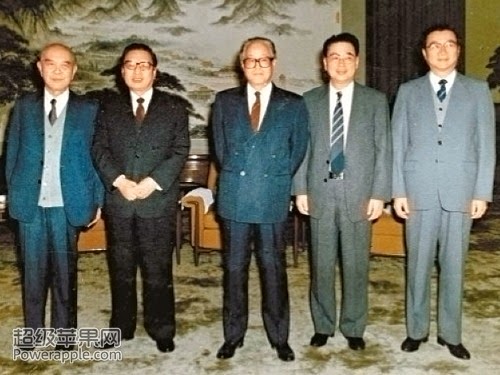
Now, on behalf of Comrades Li Peng, Qiao Shi, Hu Qili, and Yao Yilin, members of the Standing Committee of the Central Political Bureau, I would like to say a few words to the students.
The students’patriotic enthusiasm for democracy and the rule of law, opposition to corruption, and advancing reform is very valuable. The Party Central Committee and the State Council affirm this, and we also hope that students can remain calm, rational, restrained, orderly, consider the overall situation, and maintain stability and unity.
Rest assured, the Party and government will never “settle scores after the fact.”
I also want to tell the students that the central government attaches great importance to the reasonable opinions and demands put forward by everyone. We will further study the opinions and demands of students and all sectors of society, propose and take practical measures to strengthen democracy and the rule of law, oppose corruption, promote integrity, and increase transparency.
Students, the responsibility of building the Four Modernizations and revitalizing China ultimately falls on the younger generation. You still have a long time to contribute to the country and the nation. The central government hopes students will take care of their health, stop hunger strikes, and recover their health as soon as possible. This way, the central government can feel at ease, and your parents, teachers, and the general public can also be at ease. After you return, colleagues from the Central Committee and the State Council will continue to listen to your opinions and will continue to hold in-depth discussions and dialogues with various sectors, levels, and channels.
I once again urge all students to stop the hunger strike. Wishing all students a speedy recovery.
Please note:
1. This written speech was not a personal statement by then General Secretary Zhao Ziyang, but a collective statement on behalf of the five members of the Political Bureau Standing Committee. According to China’s system, this is the statement of the highest authorities.
2. This written speech was published through China National Radio and People’s Daily, thus carrying the highest authority.
This written speech:
1. It affirmed students’ “patriotic enthusiasm for demanding democracy and the rule of law, opposing corruption, and advancing reforms”;
2. Ensure that “the Party and government will never settle scores after the fact”;
3. Promise that “comrades from the Central Committee and the State Council will continue to listen to students’ opinions and deepen discussions and dialogues with various sectors, levels, and channels.”
4. Calling on students to “stop hunger strike.”
Previously, on May 13, students initiated a collective hunger strike. The “Hunger Strike Manifesto” states:
“Hunger strike requirements:
First, it requires the government to quickly conduct substantive, specific, and equal dialogue with the Beijing university dialogue delegation.
Second, they called on the government to restore the name of this student movement and give it a fair evaluation, affirming that it was a patriotic and democratic student movement. ”
It should be said that the written speech on May 17 fully met the two demands put forward by the hunger strike students.
Indeed, the hunger strike students also challenged the People’s Daily April 26 editorial, which did not mention this in the written speech. However, the content of this written speech itself is a denial of the April 26 editorial; Moreover, the collective statement by the five Politburo Standing Committee members is, in any case, more authoritative than an editorial in the People’s Daily.
On equal dialogue. Even before the written May 17 speech, several dialogues had already taken place. Xinhua News Agency, Beijing, May 15, 23:30: “Li Tieying, Yan Mingfu, and others held a discussion with some students from capital universities.” It stated: “On the evening of May 13, Yan Mingfu, Secretary of the Secretariat of the CPC Central Committee, was in the auditorium of the United Front Work Department of the CPC Central Committee, engaging in a dialogue with some students; On the afternoon of May 14, Li Tieying, Yan Mingfu, and Minister of Supervision Wei Jianxing held a dialogue with some students in the auditorium of the United Front Work Department; On the morning of May 15, Li Tieying, Yan Mingfu, and heads of relevant departments held a dialogue with some students in the auditorium of the National Committee of the Chinese People’s Political Consultative Conference. ”
It should be noted that the student representatives participating in the dialogue all came from student self-governance organizations. For example, the delegation that participated in the dialogue on the afternoon of May 14 in the United Front Work Department auditorium with Li Tieying, Yan Mingfu, Wei Jianxing, and others was the Beijing university dialogue delegation mentioned in the “Hunger Strike Declaration.” This conversation fell short halfway. However, this does not mean the authorities will stop dialogue. The written speech on May 17 specifically mentioned, “Comrades from the Central Committee and the State Council will continue to listen to students’ opinions and deepen multi-level and multi-channel discussions and dialogues with all sectors.”
Reading Zhao Ziyang’s written speech again 26 years later, can we still say that during the entire 1989 pro-democracy movement, the CCP authorities made no concessions or compromises? Can we still say that bloody crackdowns were inevitable, and if the students had accepted this call at the time—to stop the hunger strike and evacuate the square—”the situation would have been no different afterwards”?
It is deeplyregrettable that at that time, the hunger strike students did not respond directly to Zhao Ziyang’s written speech on May 17.
Afterwards, many student leaders reflected on their actions.
When Jiang Qisheng reviewed the 1989 democracy movement, he said: there were two things he hadn’t considered before. The first thing was that he did not expect the CCP hardliners to be so brutal and brutal, mobilizing hundreds of thousands of troops against unarmed civilians and ultimately ordering a massacre. “The second issue was the serious lack of understanding and trust in the Communist Party forces within the Communist Party, represented by Zhao Ziyang, Zhang Aiping, Bao Tong, Yan Mingfu, Hu Jiwei, and others, who were willing to strictly adhere to the norms of modern civilization. As a result, even on the evening of May 19 (perhaps Jiang Qisheng misremembered the date, it should have been the evening of May 17 or 18), which greatly shocked them upon hearing a few statements from Mr. Zhao Ziyang, they still did not arouse the desire to seek communication and cooperation, and still decided to maintain the purity of the movement and refrain from intervening in the ‘power struggle.’ Even when Mr. He Weiling and others voluntarily came to Renmin University for negotiations, I remained unmoved. If I, and even more people, can generally realize that this is already a struggle between civilization and barbarism, a battle between humanity and beastliness, a battle between justice and injustice, then perhaps it may be possible to break through the ‘chasm’ between inside and outside the system, between civilians and soldiers, forming a broad ‘united front,’ and thus overwhelm the forces of slaughter not only morally and spiritually, but also in momentum and materiality, and stop the atrocities. ”
For example, regarding the dialogue on the afternoon of May 14, Feng Congde wrote in his 2009 “June Fourth Diary”: “In hindsight, this dialogue was a great opportunity for ‘students to cooperate with the progressive faction within the Party.’ United Front Minister Yan Mingfu was a close confidant of Zhao Ziyang. If he took the lead in the dialogue, if successful, the ‘Zhao faction’ would gain the upper hand, setting the tone for the student movement on national TV broadcast, making it very difficult for the ‘conservatives’ to turn the tables in the future.” On the other hand, student representatives all come from autonomous organizations, and the authorities have effectively tacitly accepted the legitimacy of student organizations, denying previous claims of ‘illegal organizations.’ ”
On June 3, 1995, to commemorate the sixth anniversary of the 1989 democracy movement, the editorial department of “Beijing Spring” held a seminar in the afternoon titled “Review the 1989, Support the Country,” chaired by Yu Dahai, then editor-in-chief of “Beijing Spring.” During the 1989 democratic movement, leaders of the Beijing student movement Chai Ling, Wu Erkaixi, Li Lu, Feng Congde, Zhang Boli, Shen Tong, Xiang Xiaoji, Xin Ku, Bai Meng, Zhang Huajie, and others attended the meeting. It is understood that this was the most comprehensive gathering of student movement leaders since the 1991 Paris Conference, with the most comprehensive and in-depth discussions. Also attending the seminar were Liu Binyan, Liu Qing, Hu Ping, Wang Bingzhang, Wang Juntao, Lü Jinghua, Huaxiazi, Ni Yuxian, Su Wei, and Zheng Yi. The seminar was conducted in a rational and peaceful atmosphere. Participants expressed satisfaction with the seminar and hoped that “Beijing Spring” could present the discussion content more completely. The July 1995 issue of “Beijing Spring” published the full discussion under the title “Heroes Gathering: The 1989 Democracy Movement Seminar.”
Among them, Chai Ling said: “I also have a deep feeling that in 1989, for various reasons, the entire movement was rushed. Between student organizations, student leaders, the masses, and the reform forces within the Party, we had not formed a strong and united alliance.” This was a very regrettable situation at the time, because history has shown that any force trying to push for China’s democratic constitutionalism alone is impossible. ”
Wu’erkaixi said: “We must reflect, on whether the 1989 pro-democracy movement had a chance of success at that time. If we know the Communist Party—hey, someone just talked about totalitarianism and autocracy—I forgot who said it, but the characteristics of totalitarianism and autocracy. We know that an authoritarian government knows that retreating would lead to failure. So, is there still a chance for the 1989 pro-democracy movement to succeed? If success was impossible, then the 1989 pro-democracy movement would have grown so large, but it would have been purely a venting campaign or even a suicidal feat, but it had no political significance. And today, six years later, we sit together to discuss this issue, which clearly shows that our political expectations for the 1989 democracy movement and for all of China’s democracy are still very profound. It’s not just eight or nine years that they have adopted a martyrdom-like behavior. Clearly, none of us are sitting here as martyrs, but as pursuers of democracy. So, did there really be a chance of success in 1989? Of course, there is a chance of success. Without a chance of success, the pro-democracy movement and political opposition movement have no meaning at all. I think, simply put, the space for opposition movements is to allow the authoritarian government to make a virtuous choice between stepping back and suppression. This was the situation in ’89. Is there really no chance at all? If we happened to take advantage of such internal conflicts within the Party, there would be opportunities. I think there were more than one chance in 1980 and 1990. On May 14, Xiao Feng also mentioned that it was very regrettable to break the conversation at the time. After going abroad, I was always very sad about this feeling. There’s no point of criticism here; I just feel regret and pity. China, we have lost an opportunity. When we talked with Yan Mingfu, I remember Chai Ling was also present. The Communist officials had already made their statements as obvious as possible. That is, together, if you say there are reformists within the Communist Party, then what you are doing is also harmful to the reformers. When a Communist Party secretary says something this far, we already think it’s not just a hint, it’s almost explicit. That is to say, we should cooperate to some extent with reformers within the party, or achieve what we call a true political success beyond the meaning of martyrdom. When Chai Ling first spoke about this, I was also moved. After six years, she indeed mentioned that we should unite with different opposition factions and factions within the Party. This is completely different from what you said six years ago. Six years ago, Chai Ling stated that we should not intervene in internal party political struggles and similar topics. I can’t remember the exact words, but I think they don’t matter; the general meaning is that we must not interfere in the Communist Party’s political struggles. In other words, if I understand correctly, your feeling six years ago was to reject cooperation with reformists like Zhao Ziyang and others. This is my personal memory. There may have been mistakes, and if there are, I apologize to you. I also do not want to discuss this issue. I believe that with this possibility of success, we are conducting a thorough review and reflection today, which is meaningful. Although sometimes our reflections can be very harsh on each other, I think it is very meaningful. Because, if we don’t reflect, then we are signing something here, saying how rational, nonviolent, and peaceful we have been in 1989. This is the view of those inside our room, but how do outsiders see it? If we do not reflect on ourselves, others will not think we are rational. So we must reflect. ”
I also spoke at this seminar and later wrote an article. It mentioned:
“Some friends disapprove of the ‘quit while ahead’ strategy, reasoning that it’s hard to determine what counts as ‘good.’ However, I dare to assert that when we heard Zhao Ziyang’s May 17 speech, each of us clearly recognized that that was good. The problem is not that we miss out on good opportunities because we fail to recognize ‘good’; On the contrary, we let the ‘goodness’ of each person cloud our minds; we think they are still not good enough, and we still hope to put in a little more effort to achieve even better ones. This echoes a Western saying: ‘Better is the enemy of good.’ We failed to make wise compromises in time, that is, ‘quit while ahead.’ This is where our mistakes lie.
“I fully understand why, back then, the hunger strikers were still dissatisfied with Zhao Ziyang’s May 17 speech: since the Communist Party did not come to power through free elections and has committed so many mistakes and crimes over forty years in power, it would not be unreasonable to demand its collective resignation. I fully understand why the hunger strikers refused to end their campaign: the Tiananmen Movement awakened millions across the country, so why shouldn’t we seize the opportunity to pursue and strive for a greater victory? In other words, our mistakes back then were truly understandable. But unfortunately, that was ultimately a mistake. I want to emphasize that six years later, we should recognize this mistake and openly admit it. This shows our maturity, our strength, our high sense of responsibility toward history, and our confidence in the future.
“Even if we take a step back, you can continue to stick to your original positions, and you might think that at the time, ‘not withdrawing’ was even more sophisticated than ‘withdrawing’; However, in any case, you cannot deny the existence of the May 17 speech, because it is a direct fact; Although the May 17 Speech did not explicitly deny the April 26 editorial, it substantially changed all the erroneous accusations the editorial made against the student movement. I don’t think there’s any room for debate on this point. ”
Zhao Ziyang’s written speech on May 17 was undoubtedly the greatest concession made by the CCP authorities throughout the entire 1989 pro-democracy movement. So, how was this speech issued?
We know that on the evening of May 16, the Standing Committee of the Central Political Bureau held an emergency meeting, and Zhao Ziyang’s written speech on May 17 was delivered after this meeting. Regarding the inside story of the May 16 meeting, Hong Kong publications had already revealed it during the 1989 pro-democracy movement, and after June Fourth, more insider information about the meetings was leaked, such as the 2001 book “The Truth About China’s June Fourth.” Whether these insider reports are reliable or complete is another matter. I thought that to understand the background of the May 17 written speech, those insider information that was hard to distinguish truth from falsehood was actually not that important. Based on what everyone in front of the stage had known, we could easily sketch out the general outline.
According to official media reports at the time, what we saw in front of the stage was:
1. On May 18, People’s Daily published a written statement by Zhao Ziyang in the name of the Five Standing Committee members.
2. At 5 a.m., Zhao Ziyang, Li Peng, Hu Qili, Qiao Shi, and others visited Peking Union Medical College Hospital and Tongren Hospital to visit students hospitalized due to hunger strike.
3. At 11 a.m., Li Peng met with student representatives such as Wuerkaixi and Wang Dan at the Great Hall of the People.
4. At 5 a.m. on May 19, Zhao Ziyang, Li Peng, Wen Jiabao, Luo Gan, and others visited the hunger strike students at Tiananmen Square.
5. On the evening of the 19th, television broadcast Li Peng’s speech, stating that the central government had decided to stop the unrest.
6. On the morning of May 20, Xinhua News Agency announced the martial law order.
From the above, it appears that on the evening of May 19, the authorities’ tone suddenly changed dramatically.
That very morning, Zhao Ziyang, Li Peng, and others visited the hunger strike students at Tiananmen Square. Zhao Ziyang’s speech was broadcast on television, and he appeared tired and helpless. Many people sensed the political situation was changing, but the tone of his speech remained positive and caring for the students.
Of particular note is Li Peng. On the morning of the 18th, when meeting student representatives at the Great Hall of the People, Li Peng said: “Neither the government nor the Party Central Committee has ever said that the majority of students are causing unrest.” We have always affirmed that everyone’s patriotic enthusiasm and aspirations are good, and that many things are done right,” and so on. This tone does not violate his own written speech by Zhao Ziyang on May 17. However, just one day later, he loudly announced on television that the central government had decided to “stop the unrest.”
Recalling that three days ago, Yan Mingfu went to the square to call on students to withdraw, saying that if you believe there are reformists within the Party, then what you are doing is detrimental to them, we can reasonably speculate:
In those days, the two upper factions of the CCP were at a very delicate stage of tense confrontation yet fragile balance. On the urgent issue of how to quickly eliminate the student movement, both camps made their views clear. Zhao Ziyang’s faction advocated accepting students’ demands as much as possible, insisting that more direct and moderate dialogue would be effective, while Li Peng’s faction insisted that military control was essential unless martial law was imposed. With both sides deadlocked, the hardliners had no choice but to agree to try soft measures first (since you can’t try hard methods first); if soft methods failed, they would resort to military force. Based on the mindset of trying your soft methods first, the hardliners agreed to Zhao Ziyang’s written speech in the name of the Five Standing Committee members of the Politburo; For the next day or so, even Li Peng had to reluctantly adopt a soft stance.
Broadly speaking, if Zhao Ziyang’s written speech on May 17 was effective, it would mean the moderate faction’s advocacy had succeeded, thereby consolidating the moderate’s position among the upper echelons. But if the moderates’ methods failed, the hardliners would dominate the political situation, the moderates would be purged, and the hard measures would be immediately implemented.
We see that under the given power structure of the upper class, at this moment, it is not the power struggles at the top that determine the fate of the democratic movement below, but the movements and movements of the movement below determine who wins or loses in the power struggle at the top.
Here, let’s talk about Zhao Ziyang’s May 16 talk to Gorbachev about Deng Xiaoping still at the helm. What was Zhao Ziyang’s motivation for saying this? Some say Zhao Ziyang shifted the blame onto Deng Xiaoping and betrayed him; Some say Zhao Ziyang was confronting Deng Xiaoping—a challenge, a coup. Zhao Ziyang himself later explained that he had no such motives. Considering the context of Zhao Ziyang’s remarks (including the meeting between Deng Xiaoping and Gorbachev that morning), this explanation can also be reasoned. For now, I won’t speculate on Zhao Ziyang’s motives for his speech, but will examine the consequences of this statement. Undeniably, Zhao Ziyang’s words stirred up anti-Deng and anti-Deng sentiments among protesters, and to a considerable extent diluted public attention to the written May 17 speech. Moreover, if Deng Xiaoping himself was angered by Zhao because of this, it would be understandable.
Nevertheless, there is no evidence that hardliners used this phrase tochallenge Zhao Ziyang at the emergency Politburo Standing Committee meeting on the evening of May 16. In the following two days, the public behavior of the CCP authorities, including Li Peng’s, largely remained in the mild tone of Zhao Ziyang’s written speech on May 17. Therefore, we have reason to say that if the students in the square had responded promptly and positively, not only could the later martial law and massacres have been avoided, but the status of the reformists within the Party, especially the achievements of the democracy movement, could have been preserved.
Some assert that the 1989 pro-democracy movement inevitably ended in defeat by government suppression, arguing that Deng Xiaoping, the most powerful figure in the CCP, had long been determined to suppress it. The reason he delayed in carrying it out, allowing the public to become increasingly lively and seem to gain the upper hand, was simply because the party’s top leadership disagreed and General Secretary Zhao Ziyang and others did not support the crackdown. Once at the upper echelons of the Party, hardliners defeat moderates, the failure of the democracy movement becomes inescapable. According to this view, the success or failure of China’s 1989 pro-democracy movement depends entirely on the will of the CCP authorities. Ironically, those who support this view also firmly insist that “democracy is won through effort, not by gifts from above.” I really don’t understand how they reconcile these two completely opposing viewpoints.
Firstpublished in China Human Rights Biweekly