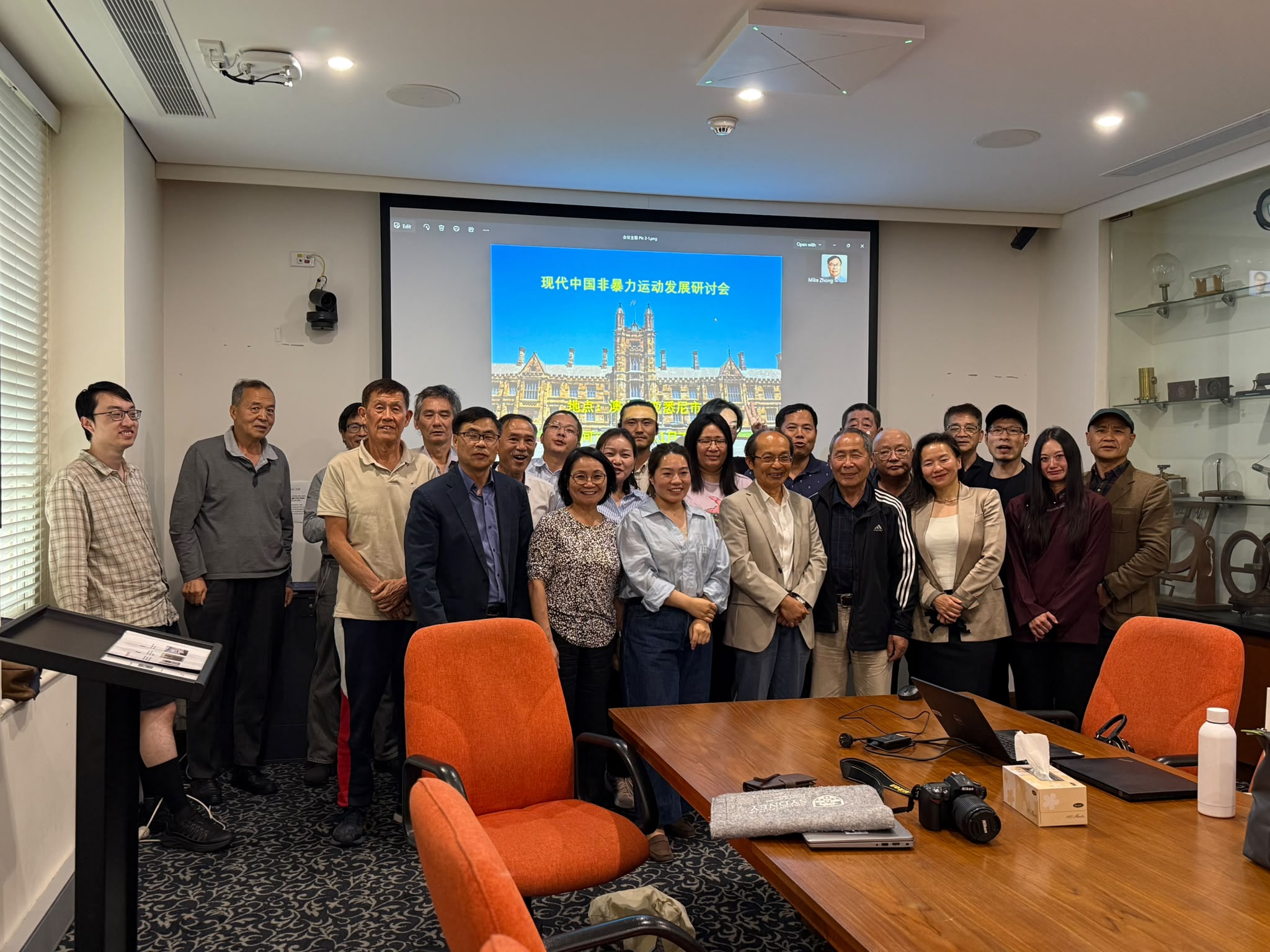
[Joint report from Sydney by the Chinese Democratic Unity Alliance and the Federation for a Democratic China] On Saturday, 7 November 2026, the international academic seminar “China’s Democratisation and International Human Rights: Challenges and Cooperation amid Global Change” was held in the Physics Building (A28) at the University of Sydney. The event was jointly organised by the Chinese Democratic Unity Alliance (CDUA) and the Federation for a Democratic China (FDC).
Focusing on human rights in Tibet, Xinjiang and Hong Kong, the seminar brought together scholars, democracy advocates and human-rights defenders from around the world and across Australia and New Zealand. Participants joined both in person and online to examine new features of authoritarian rule and discuss the evolution of non-violent resistance and future cooperation across communities.
Opening remarks: building cooperation amid global change
The seminar opened at 10:00 a.m. with welcoming remarks from Dr Mike Zhong, a former CDUA president. He said that, amid global political change and the spread of high-tech authoritarianism, overseas democracy movements must not only maintain their work but also cooperate closely with international human-rights networks and place China’s democratisation within the broader defence of human rights.
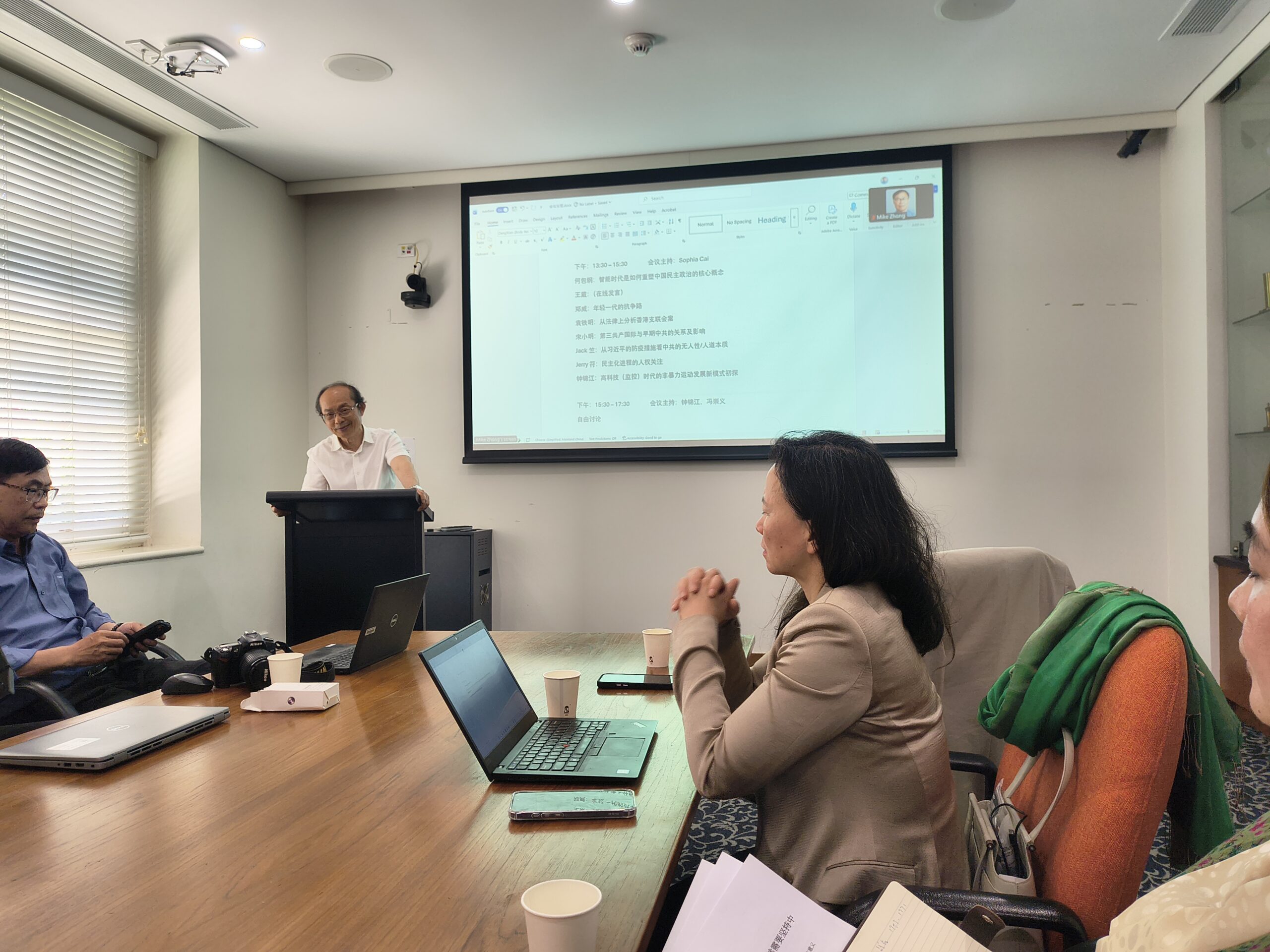
The morning session was chaired by Xiaogang Zhang of the FDC. Speakers addressed geopolitics, human rights in Tibet and Xinjiang, and political developments within the Chinese Communist Party after its 20th National Congress. The afternoon session, chaired by Sophia Cai, focused on grassroots resistance, historical roots and specific human-rights cases.
Expert presentations: understanding authoritarianism and paths of resistance
Professor Chongyi Feng presented “Joining Forces to Confront the Final Frenzy of Xi’s Re-Totalitarianism”, analysing the current political environment and the challenges and opportunities facing China’s democracy movement.
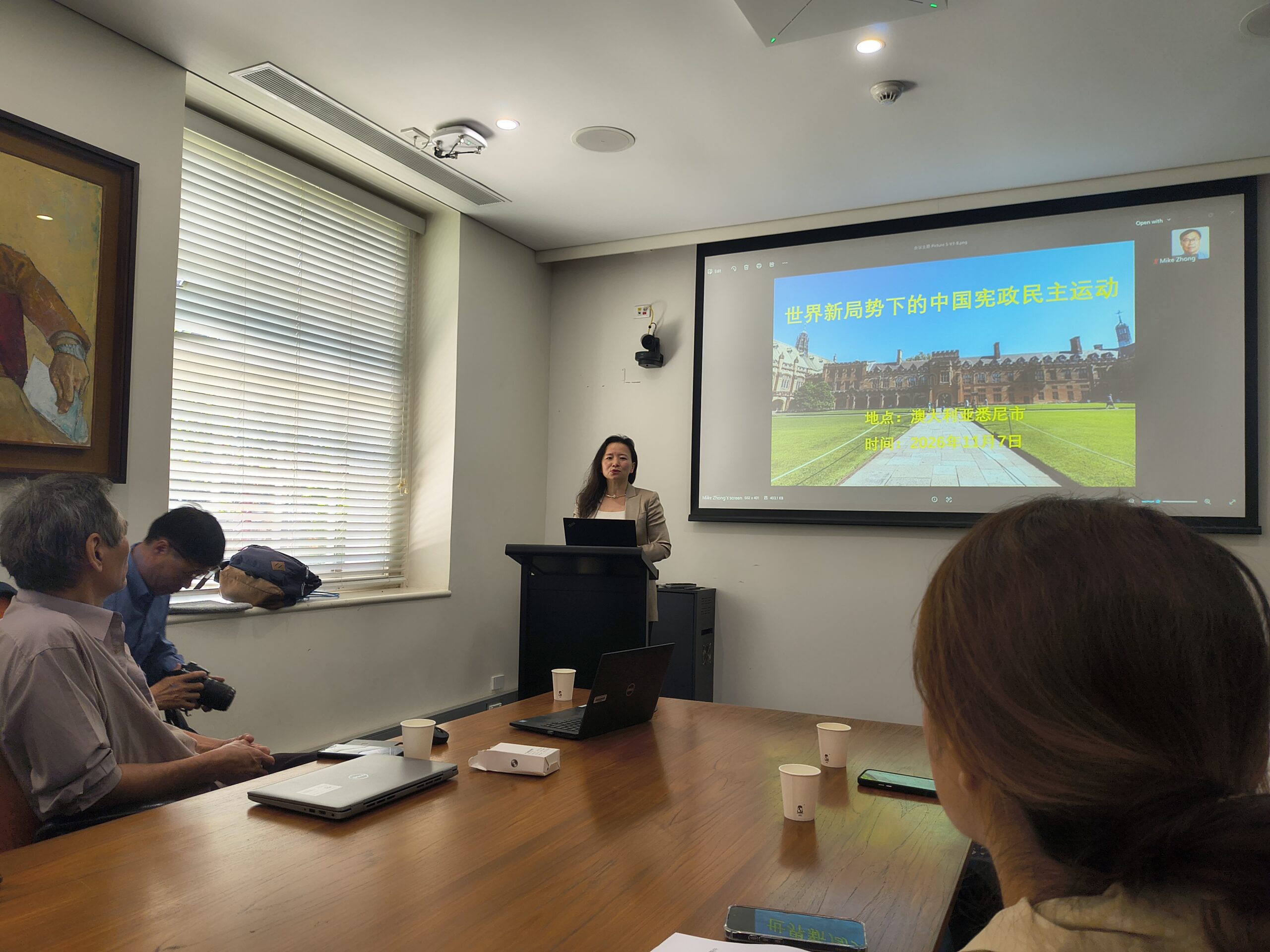
Lei Cheng, speaking on “The Long Road to Press Freedom”, described her journey from television journalist and presenter to imprisonment by the Chinese authorities. Her account highlighted the personal cost of pervasive surveillance and authoritarian control.
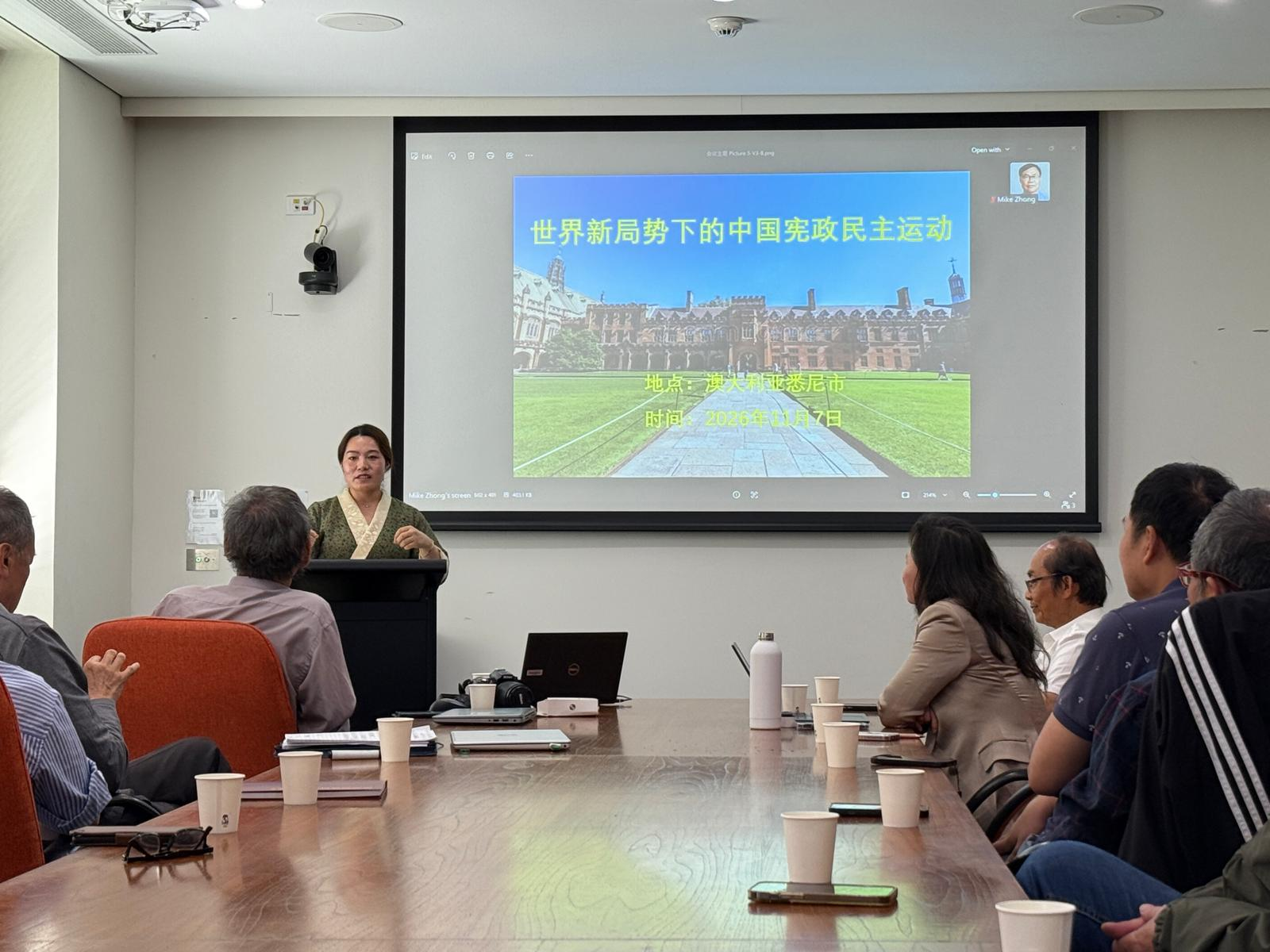
Dawa Sangmo discussed “China’s Second-Generation Ethnic Policy from the Perspective of Tibetan Parliamentary Decision-Making”. She examined how official “ethnic integration” policies affect minority cultures and identities, and called for mutual respect and cooperation among different peoples.
Professor Baogang He explored how the age of artificial intelligence is reshaping core concepts in Chinese democratic politics, analysing the impact of digital technology on democratic values and political participation.
Dai Wang joined online to discuss strategic adjustments for the overseas democracy movement in a complex international environment.
Wei Zheng presented “The Younger Generation’s Path of Resistance”, sharing the awakening and practical experiences of young people at home and abroad who oppose authoritarianism and pursue freedom.
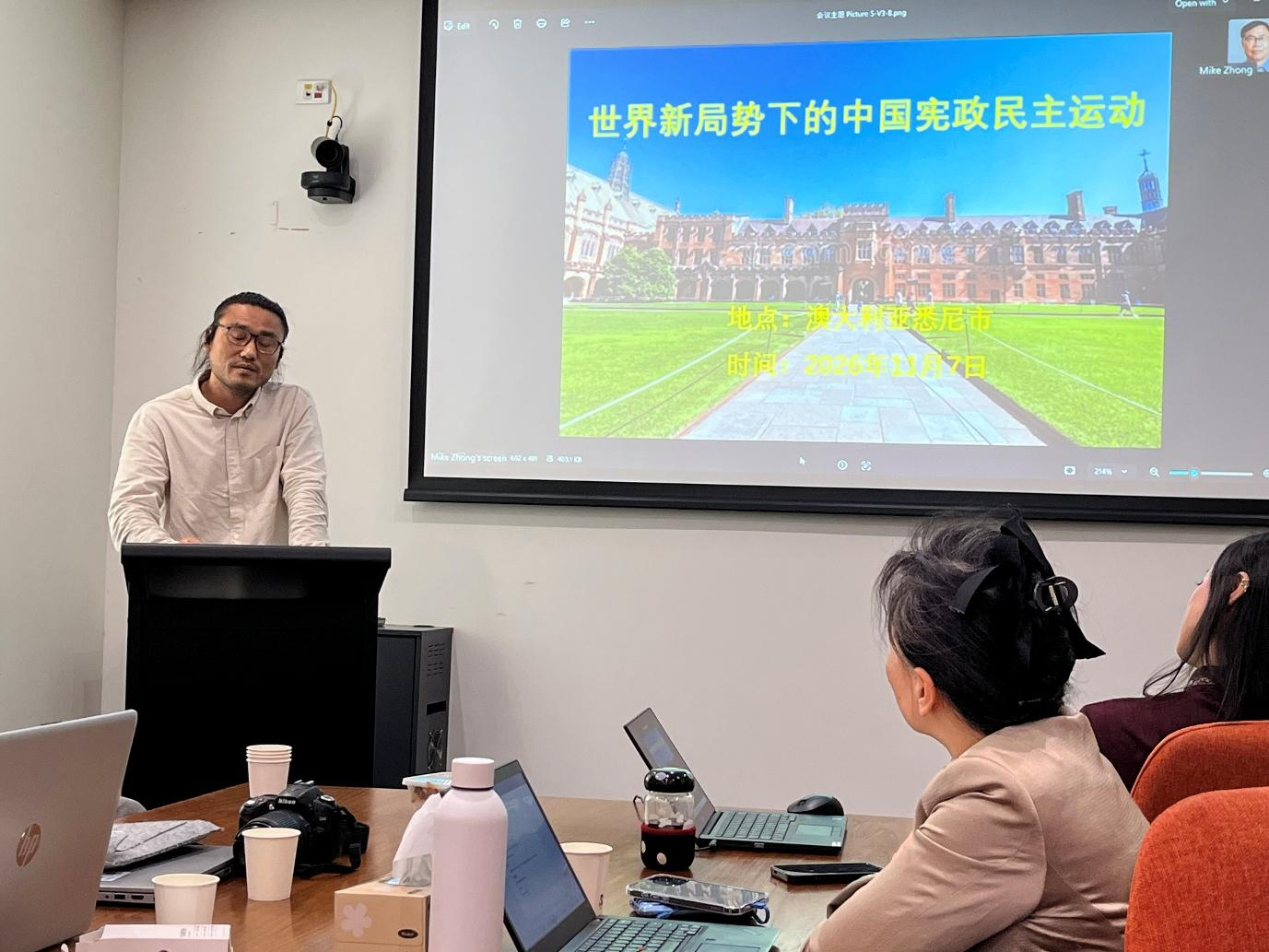
Tieming Yuan offered a legal analysis of the Hong Kong Alliance case and examined the use of national-security mechanisms against Hong Kong’s rule of law and civil society.
Xiaoming Song traced the historical relationship between the Communist International and the early Chinese Communist Party.
Zhaokun Zhu examined China’s pandemic-control measures, their impact on fundamental rights, and the civic protests and awakening they provoked.
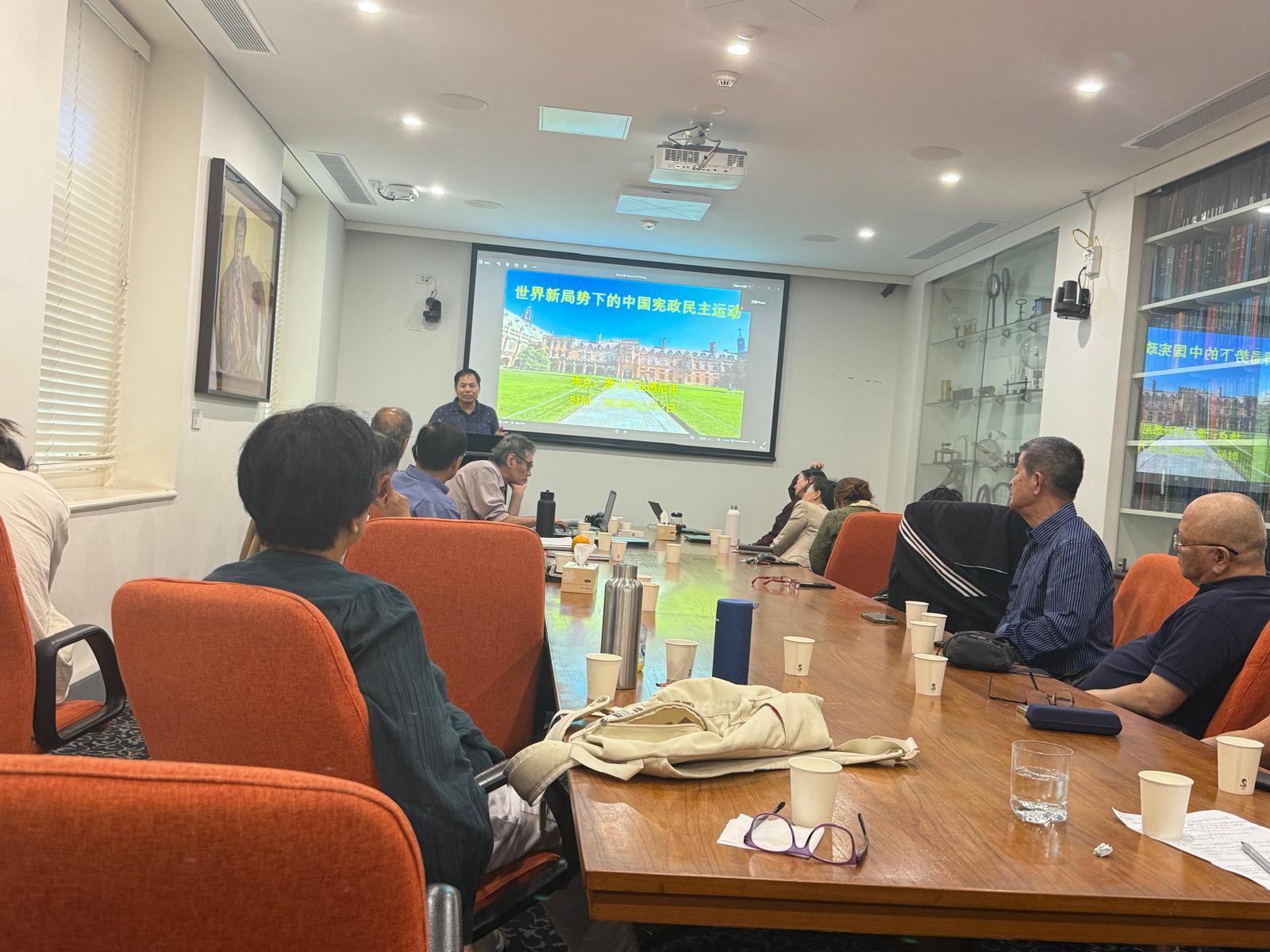
Shengli Fu called for sustained international attention to human rights throughout China’s democratisation process and for regular diplomatic and economic measures in response to abuses.
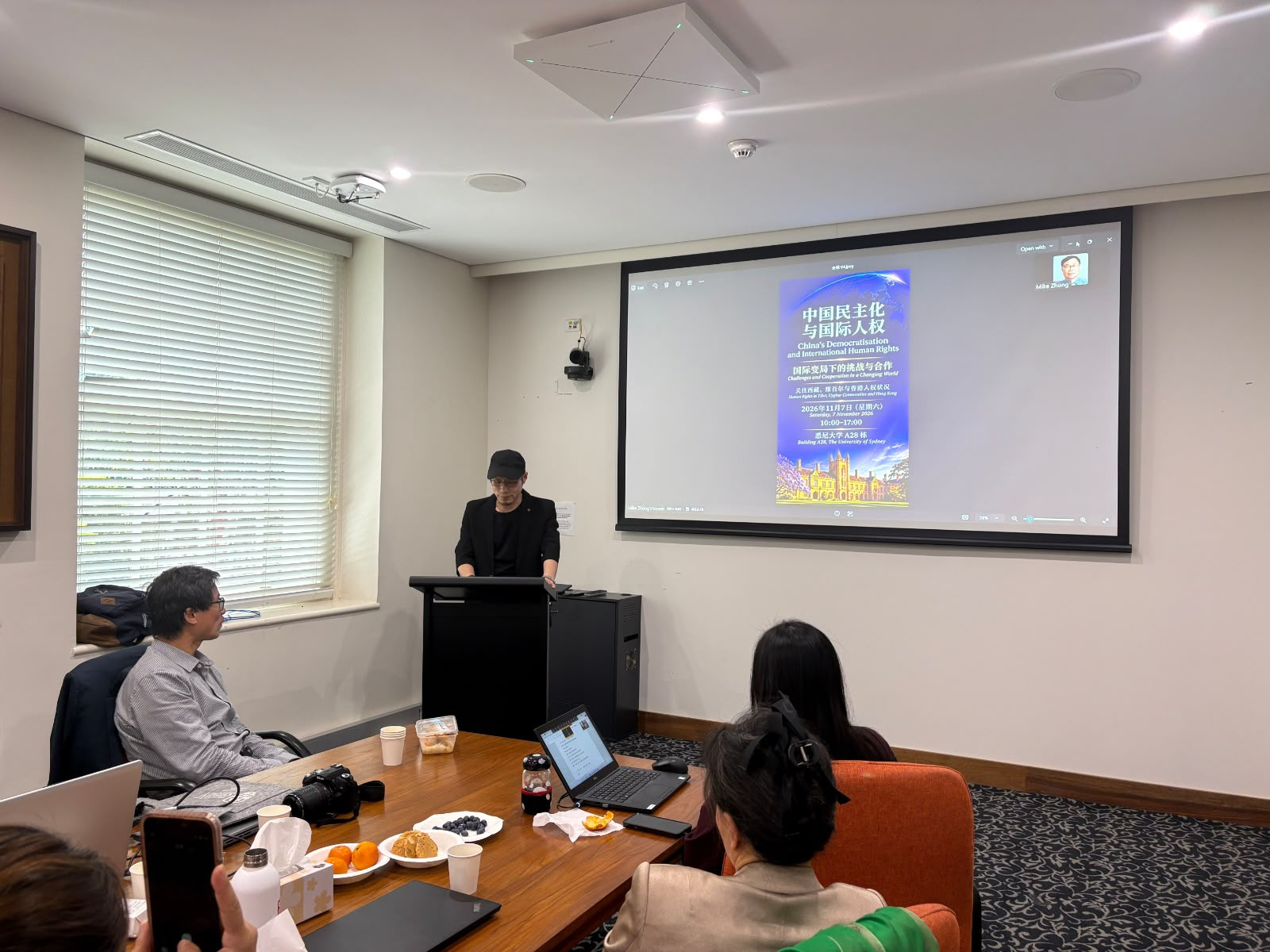
Dr Mike Zhong concluded the presentations with “An Initial Exploration of New Models for Non-Violent Movements in the Age of High-Tech Surveillance”. He argued that digital authoritarianism and pervasive biometric surveillance present unprecedented challenges to traditional non-violent resistance, while also driving a shift in organising methods.
Drawing on recent examples including Bangladesh and China’s White Paper Movement, Dr Zhong discussed how decentralised, networked and cross-regional collaboration can overcome the intellectual and physical isolation imposed by high-tech authoritarian systems. He stressed that peaceful, rational and non-violent action remains the most resilient and legitimate foundation for China’s democratic transition, while future movements will need smarter technical countermeasures and organisational renewal.
Roundtable: building an international human-rights community
From 3:30 p.m. to 5:30 p.m., Dr Mike Zhong and Professor Chongyi Feng co-chaired the closing roundtable.
Participants, University of Sydney students and local human-rights observers discussed how to resist transnational repression and campus interference, and how to build substantive alliances among Chinese democracy advocates, Tibetans, Uyghurs and Hong Kong dissident communities. Veteran democracy and media figures including Weijian Chen, Jian Gao and Weiqiang Zhang joined audience members in offering proposals, including implementation of Australia’s Magnitsky-style human-rights sanctions and a legal-aid fund for victims overseas.
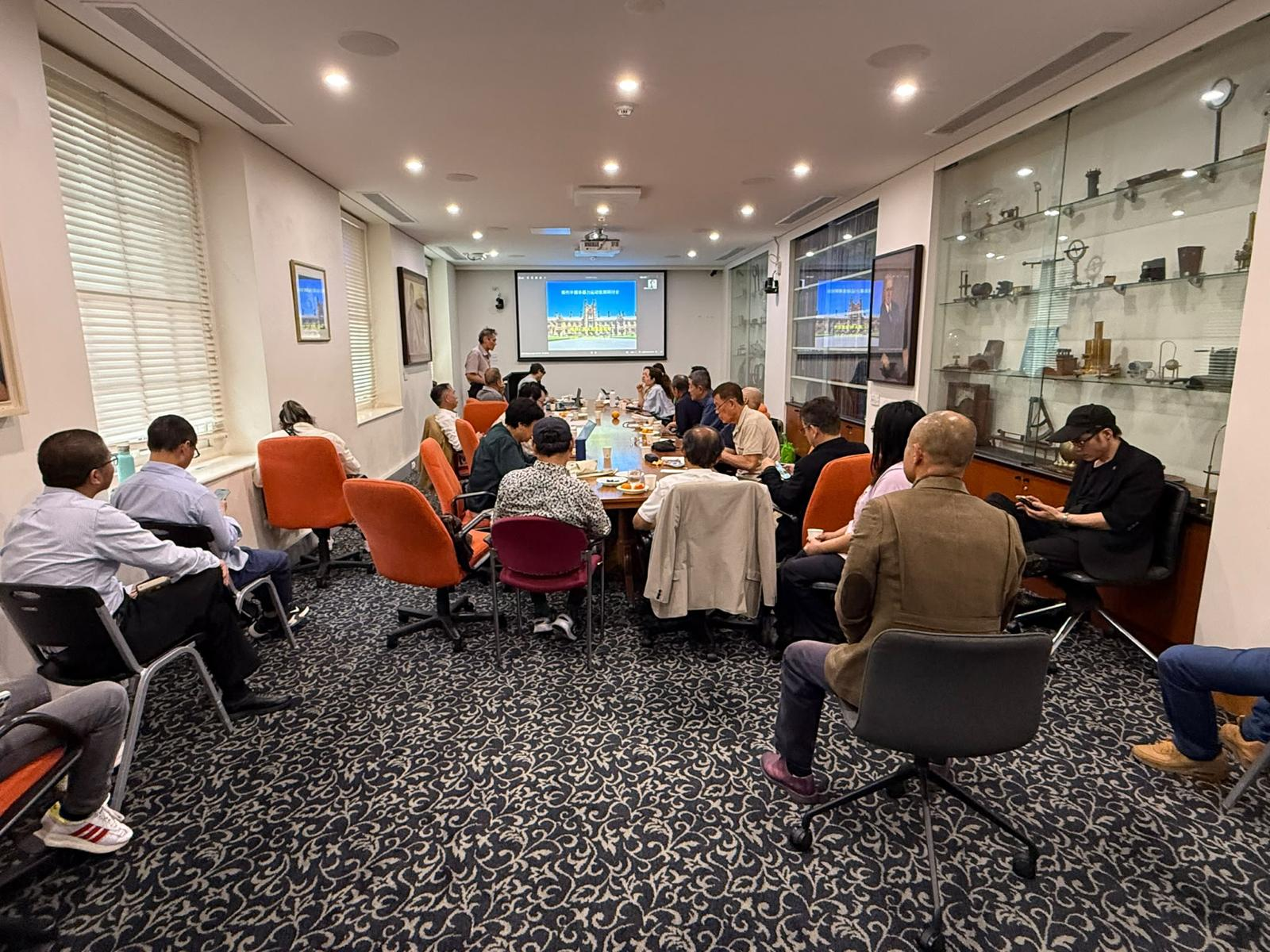
Participants agreed that China’s democratisation is not an isolated regional matter, but an international human-rights issue closely connected to the future of freedom. The CDUA and FDC pledged to continue bringing together overseas Chinese democratic forces through non-violent action and cooperation across communities.
The seminar concluded with applause.
Special acknowledgement: The seminar was initiated and actively organised by Wei Zheng, chair of the Sydney branches of the CDUA and FDC.
Special correspondent: Jack Zhu