Author: Hu Ping
February 2012
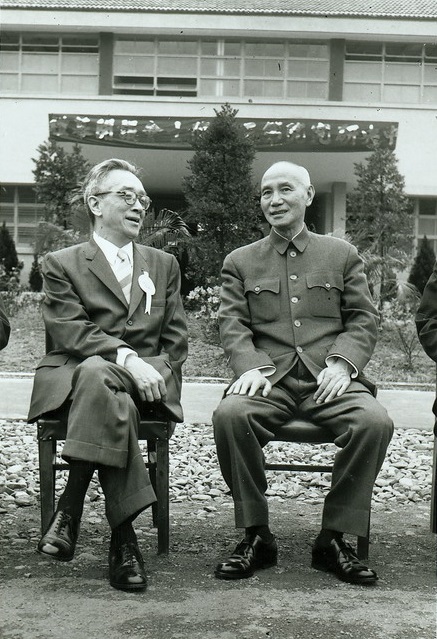
February 24, 2012 marks the 50th anniversary of Mr. Hu Shi’s passing. Here, I would like to share my own experience reading Hu Shi back then. This speech is a bit long, so I plan to finish it in two parts.
In March 1969, I went to the countryside to work in the countryside; Half a year later, he returned to the city to visit relatives, and from a classmate’s home, he obtained more than a dozen books to bring back to the countryside, one of which was “A Critique of Hu Shi’s Thought.”
“Critique of Hu Shi’s Thought” is a collection of essays published in 1955, still in vertical format; At that time, the campaign against Hu Shi launched by Mao Zedong had come to an end. This collection of critical essays is a summary of the movement. The collected works include Hu Shi’s friends from that year, Communist Party theorists, and several rising stars. They criticized Hu Shi’s thought from the perspectives of philosophy, history, literature, and politics.
The text quotes several original texts by Hu Shi. This allowed me to somewhat understand some of Hu Shi’s ideas. Although they were mostly fragmented and often taken out of context, they still left a deep impression on me.
In fact, the heretical ideas we encountered back then partly came from internal publications and books published 49 years ago, and partly from various “negative materials” published during the Great Critical Movement.
Hu Shi advocated independent thinking. Hu Shi said: “Being led by the nose by Confucius Zhu Xi is certainly not wise; Being led by the nose by Marx, Lenin, or Stalin is not a true hero. These words deeply resonated with me.
However, at that time, it was very difficult for a person to persist in independent thinking. Because our generation had long been preconceived with Marx, Lenin, Stalin, and especially Mao Zedong’s ideas. This set of ideas is called the “universally applicable objective truth.”
The statements I readabout Hu Shi, as well as those of similar ‘villain’ figures, were pre-marked as ‘negative material.’ This requires us to “read with a critical eye.” Thus, when we find that certain “reactionary remarks” actually resonate with us, we first start to doubt whether we are wrong.
Furthermore, experience tells us that anyone who publicly makes such statements will be labeled as “ideological reactionary” or even “counter-revolutionary” and severely punished. This inevitably causes us to secretly feel fear and subconsciously shut those thoughts out.
But things didn’t end there. Even if you overcome preconceived notions and fears, it’s still very difficult to identify with those labeled “reactionary ideas.” Because Marxist-Leninist-Maoist thought is regarded as a vast all-encompassing system, encompassing heaven and earth, past and future, nature, human society, all within it. From material primacy and spiritual secondary to scientific socialism and communism.
Since Hu Shi’s ideas were openly and openly anti-Communist, Marxist-Leninist, then even agreeing with Hu Shi’s ideas—even if only one of his important ideas—seems to have a single pull affecting the whole system, implying a challenge and rupture with the whole and the grand system. As a result, you become confused, indecisive, and less confident in the results of your independent thinking, which weakens your own independent thinking.
As one of my friends said, the clever use of systems is that any judgment can never be direct, but can only be a “inference.” This not only makes it difficult for you to refute a judgment, but also makes you hesitate to make your own judgment. If the right and wrong of any matter must start from primitive communism, and keep talking about communism, then of course you have no choice but to keep silent. Over time, we have come to believe that right and wrong, good and bad, are determined by argument, not intuition. Without thoroughly studying Marxist-Leninist-Maoist theory, one cannot know right from wrong, nor good from evil.
Lookingback now, all of the above seems absurd and laughable. But back then, this set of things kept us very tightly bound. The more seriously and seriously you take your thinking, the tighter those constraints become on you.
At that time, a group of heretics or so-called dissidents appeared among the youth. But most of these were merely extensions and developments of Mao Zedong’s thought, especially his theory of continuing revolution under the dictatorship of the proletariat—that is, the theory of the Cultural Revolution, mainly the ideas of the Paris Commune, opposing bureaucratism and privilege. Some go further, returning to Leninism or to the original Marx in their minds.
It should be said that forming such thinking is not too difficult, because they still base themselves on the entire system and have not yet touched that system itself. After all, in that environment, it was extremely difficult for one person to break out of that seemingly all-encompassing grand system.
Above, I mentioned that among the educated youth, the vast majority still base their dissents on Marx’s system. One reason is that, at that time, we had far too few resources of non-Marxist ideas. Among my contemporaries, my thinking has far-reached. At that time, I had already developed deep doubts about Marxism. I further believe that no one can monopolize the truth; Even if someone discovers objective truth, criticism should be allowed and not imposed on others. From this, I increasingly feel that more important than judging what is truth or falsehood is freedom of thought, freedom of discussion, and freedom of speech.
Hu Shi advocated individualism. Hu Shi said, “Now someone is telling you, ‘Sacrifice your personal freedom to seek the freedom of the nation!’” ‘I say to you: ‘To fight for your personal freedom is to fight for freedom for the country!’ Competing for your own dignity is fighting for the dignity of the country! A free and equal country cannot be built by a bunch of servants! “”Cast yourself into a vessel. Only then can we hope to benefit society.” Hu Shi also quoted Norwegian playwright Ibsen: “The strongest and most powerful person in the world is the one who is isolated!” “Sometimes I feel like the whole world is like a ship sinking at sea; the most important thing is to rescue myself.”
Our generation was indoctrinated with collectivism from a young age, and individualism was seen as the root of all evil. Back then, when we wrote articles and ideological reports, we were always asked to review and criticize our individualism. This made me feel a faint sense of oppression. Now, reading Hu Shi’s strong promotion of individualism, it is satisfying and hits the mark.
After only one or two years of educated youth life, their original naive idealism quickly faded, and many fell into confusion and depression. A few of my good friends and I encouraged each other, and we often mentioned Hu Shi’s two sayings—”Forge yourself into a vessel” and “Rescue yourself.”
After that, the atmosphere in society changed dramatically. Chengdu people began to popularize a saying: “New life, everyone manages their own business.” I think this kind of individualism is not sound because only of oneself. Individualism does not involve just the self itself, but every single self. Just like freedom of speech—I can freely say what I want to say, but that’s not really freedom of speech. The so-called fight for individual freedom should be about making freedom a universal right.
Fora long time, what I knew about Hu Shi was limited to a few fragments of speech. It wasn’t until the autumn of 1978, when I entered Peking University, that I first read the ‘Collected Works of Hu Shi.’ After reading, I was somewhat disappointed: Hu Shi’s views and views were excellent, but his arguments were rather thin, lacking depth and thoroughness.
Finally, let’s discuss Hu Shi’s views on tolerance.
In his later years, Hu Shi quoted a professor from his alma mater, Cornell University—”The older I get, the more I feel tolerance is more important than freedom.” Hu Shi said: This saying is “an indelible maxim”: “Sometimes I even feel that tolerance is the foundation of all freedom; without tolerance, there is no freedom.”
In my view, tolerance and freedom actually refer to the same thing; Or rather, two sides of the same thing.
Take freedom of speech as an example. We know that freedom of speech mainly refers to the freedom of a minority who hold different opinions (Rosa). Luxembourg quote: Freedom is always the freedom of dissenters); Protecting freedom of speech means safeguarding the freedom of minorities who hold different opinions. However, since the minority is the minority, they are weak, so relying solely on their own strength is not enough to protect themselves; This requires the tolerance of the majority, the tolerance of the strong. Without the tolerance of the majority, without the tolerance of the strong, there is no freedom for the minority, and no freedom for the weak.
In this sense, the so-called struggle for freedom is not primarily about sharply criticizing current politics and the rulers; Nor is it about speaking on behalf of the people, representing the majority of ordinary people; It’s not even the enlightenment some people understand—sharing a particular position or opinion they believe is correct to win the approval of the majority. What truly matters is first teaching everyone to tolerate different opinions and protect the rights of dissenters, to learn: “Although I oppose your views, I firmly defend your right to speak.”
Looking at the intellectual circles of 20th-century China, Hu Shi’s ideas may not be the deepest, but they are certainly the most correct. In those turbulent times and shifting people’s hearts, his unwavering adherence to the ideals of freedom and democracy was especially admirable. In today’s China, liberal democracy remains an unfinished business, and commemorating this great liberal thinker holds special significance.
Reposted from Hu Ping’s Facebook