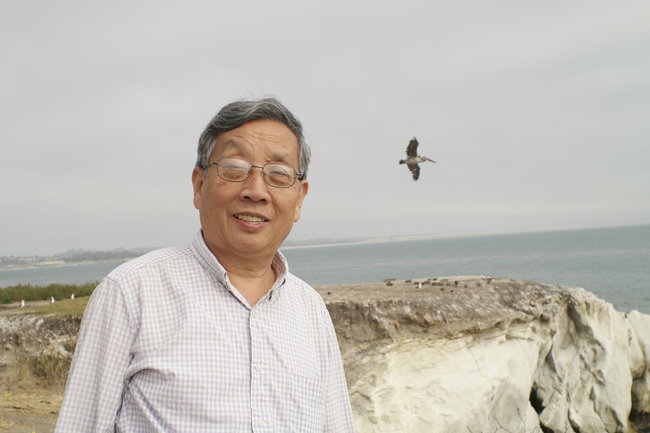
 Liu Xiaobo’s philosophy of nonviolent resistance is a precious spiritual legacy he has left us, but his philosophy has also sparked considerable controversy. A year ago, when Liu Xiaobo died of liver cancer in prison, some said that Liu Xiaobo had sacrificed his life to completely reject his philosophy of nonviolent resistance. In light of this, it is even more necessary for us to revisit Liu Xiaobo’s philosophy of nonviolent resistance.
19933In [month], Liu Xiaobo was invited to visit the United States, during which he was interviewed by Ya Yi, a reporter from China Spring, where he discussed the issue of nonviolent resistance. Liu Xiaobo said that the main reason most Chinese people insist on peace, rationality, and non-violence is mainly “for security and strategic reasons,” “because this regime is simply too powerful.” When violence is used, you have no way to fight it; instead, you give it an excuse.” Others do so out of democratic ideals and to avoid violence during regime changes. Such people are rare, and their voices are very weak.
Liu Xiaobo’s view coincides with Michnik, advisor to the Polish Solidarity Union. During the Polish military administration in 1985, Mičić answered a question posed by Western journalists: Why did Solidarity declare from the start to renounce violence? Michnick said he feared that violent revolution could distort the nature of the democratic movement. Furthermore, Michnick spoke bluntly: “We don’t have guns.” ”
The Dalai Lama holds the same view. The Dalai Lama’s insistence on nonviolent resistance stems partly from ideals and principles, and partly from reality and strategy. In < span lang="EN-US"> 2011< span lang="EN-US">3In an interview in January, a reporter from Sing Tao Daily asked the Dalai Lama, among the exiled Tibetans who advocate violence, how do you respond to their views? The Dalai Lama said, ‘I just asked them, how do you plan to do this?’ Where can we get guns? Missing a lot is unacceptable, we need a lot. Who will sell them to us? Where is it brought in? The opponent was left speechless. Here, the Dalai Lama asks very specifically. Since the other party wants violence, you can’t just use nonviolent grand principles to persuade them, because they don’t accept those grand principles. The problem is, if you advocate violent resistance, but have no reliable methods or means to implement it, it becomes an empty slogan.
Some advocates of violent resistance say, yes, now we can only verbally promote violent resistance. But if this idea spreads, once the necessary material conditions are met, people will take up arms to resist violence. This statement underestimates human instinct for self-defense. Do you think those people in Tiananmen Square didn’t want to fight back with force when facing tanks? If they possess weapons strong enough to contend with the other side, do you need to inspire them before they understand their right to resist armed violence?
Yu Jianrong quoted a farmers’ rights leader in his book “The Rights Struggles of Contemporary Chinese Farmers.” The farmers’ rights leader named Ni Ming said: “Currently, farmers have not turned to violent resistance, not because they lack the ideological foundation or emotional preparation for this, but because the era of broadsword and spear has passed.” “Raising a pole cannot make a flag, cutting wood cannot be used as a weapon.” Ni Ming said that, given the acute conflict between officials and civilians in China today, if broadswords and spears were to be used, violent protests among the people would have happened countless times already.
Today, for us people, only nonviolent resistance is the real means of resistance. If people lose faith in nonviolent resistance, they will not turn to violent resistance because they lack the means to resist violently; If they give up nonviolent resistance, in reality, they are abandoning practical means of resistance, and in the end, they are abandoning the struggle itself. Liu Xiaobo’s insistence on nonviolent resistance is absolutely correct both in theory and practice. This precious spiritual legacy is something we must inherit.
July 14, 2018